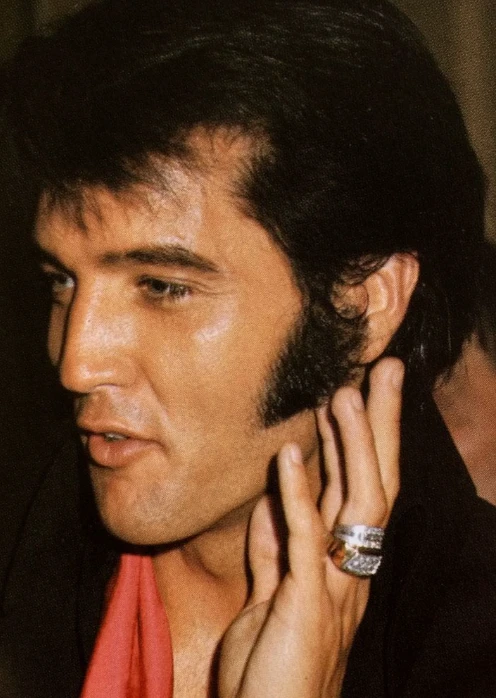
“The most handsome man I ever saw.” Those words have been used by countless people to describe Elvis Presley. Fans said it. Journalists said it. People who met him only once often remembered his face for the rest of their lives. With his dark hair, striking blue eyes, unforgettable smile, and natural charm, Elvis had the kind of beauty that seemed almost impossible to ignore. He could stand still and still command attention. He could walk into a room and change the energy before saying a word. But those who truly remembered Elvis often spoke about something deeper than his looks. His greatest beauty was not something a camera could capture.
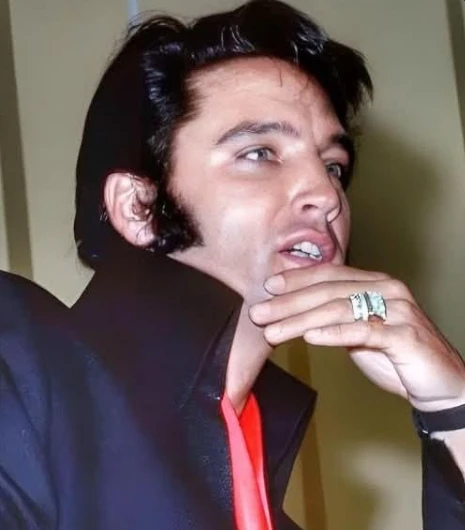
Of course, Elvis Presley was extraordinarily handsome. In the 1950s, his appearance shocked and fascinated the public almost as much as his music did. He looked different from the polished entertainers many Americans were used to seeing. There was something youthful, dangerous, soft, and powerful about him all at once. Photographers tried to capture it in portraits, concert shots, magazine covers, and movie stills. They captured the hair, the eyes, the smile, and the famous stance. But even the best photograph could only tell part of the story.
People who saw Elvis in person often said that pictures did not fully explain him. His beauty moved. It changed when he laughed. It softened when he listened. It became electric when he stepped onto a stage. A camera could capture his face, but it could not fully capture the warmth that came with it. It could not capture the way he made people feel noticed. It could not capture the gentle humor, the politeness, or the quiet kindness that stayed with people long after the moment passed.