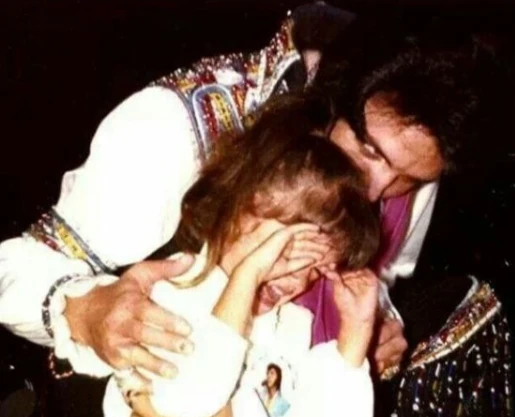
On August 16, 1977, the world lost Elvis Presley. He was only forty-two years old, far too young for someone who had already changed music, culture, and the lives of millions. The news spread with astonishing speed, moving through homes, restaurants, offices, streets, and radio stations across America. Conversations stopped. People turned up the volume on their radios, hoping they had misheard. Television anchors struggled to find the right words. Outside Graceland, grieving fans began to gather, carrying flowers, candles, photographs, and handwritten letters. Some stood silently through the night. Others cried openly. For many of them, this was not simply the death of a celebrity. It felt like losing someone who had been part of their lives for more than two decades.
What made that grief so powerful was the extraordinary journey Elvis had taken. He was born on January 8, 1935, in a modest two-room house in Tupelo, Mississippi, during some of the hardest years of the Great Depression. His family had little money, and life was often uncertain, but music was always nearby. Gospel hymns from church, country songs from the radio, and the blues that echoed through the American South all became part of the young Elvis. Long before the world knew his name, he was listening, absorbing, and feeling the sounds around him. Those early influences shaped the voice that would later help change popular music forever.
When Elvis walked into Sun Studio in Memphis and recorded “That’s All Right” in July 1954, something new entered the world. It was raw, energetic, and different from what many people had heard before. Producer Sam Phillips understood that Elvis had done something rare. He had brought together musical traditions that were often kept apart and made them feel natural in one unforgettable sound. Country, blues, gospel, rhythm, and youthful energy all came together in a way that spoke directly to a new generation. It was not just a record. It was the beginning of a cultural shift.