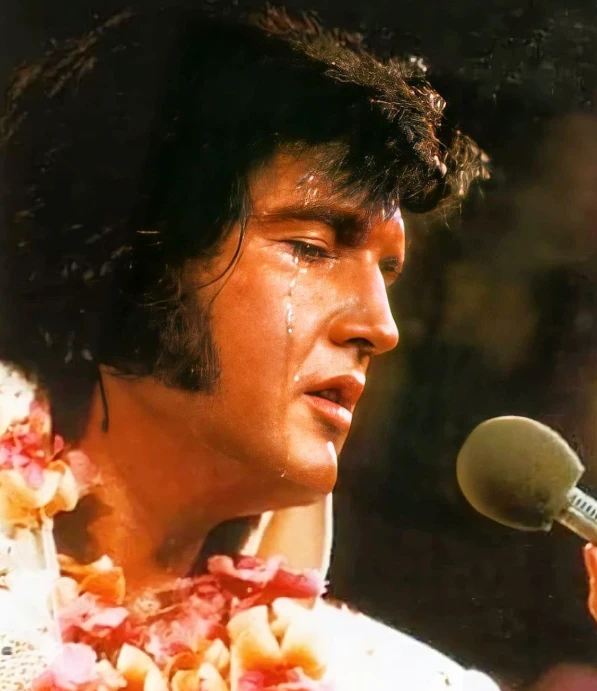
The morning of August 16, 1977 began quietly inside Graceland, almost like any other day in the private world of Elvis Presley. Outside, the world still knew him as the King of Rock and Roll — the man with the unforgettable voice, the magnetic stage presence, the smile that could light up an arena, and the songs that had already become part of American history. But behind the gates of his home, Elvis was not a symbol or a myth. He was a man, tired from years of pressure, fame, expectation, illness, and the impossible weight of being loved by millions.
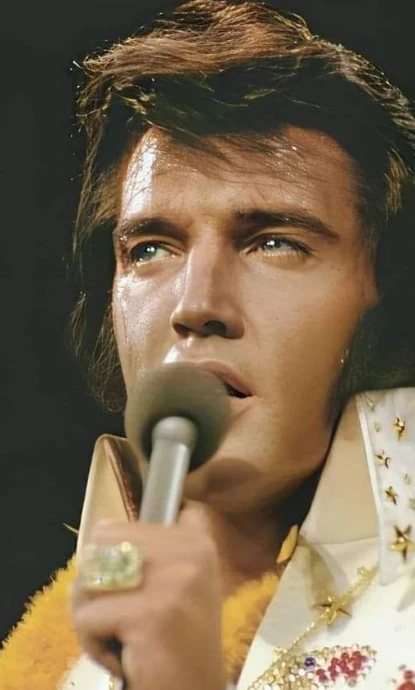
Before that day was over, everything changed. Elvis Presley was gone at just forty two years old. The news moved through Memphis first like a whisper, then like a wave. Soon, it reached the entire world. Radios interrupted programming. Television anchors struggled to explain what had happened. Fans stopped what they were doing and listened in disbelief. For many, the question was simple and unbearable: how could Elvis be dead? How could a voice that sounded so alive suddenly be silent?
Almost immediately, people began gathering outside the gates of Graceland. Some brought flowers. Some brought candles. Some stood in silence, unable to find words. Others cried openly, as if they had lost someone from their own family. In a way, many felt they had. Elvis had been there through their childhoods, their first dances, their heartbreaks, their marriages, their lonely nights, and their happiest memories. He was not just a performer on a stage. His music had entered their homes, their cars, their hearts, and their personal stories.