On August 16, 1977, the world said goodbye to Elvis Presley. The headlines were simple and devastating: the King of Rock and Roll was gone at only forty-two years old. To the public, it sounded sudden, shocking, almost impossible to understand. A legendary voice had fallen silent. A man who had seemed larger than life was suddenly gone. But the truth behind Elvis’s final chapter was far more painful than any headline could explain.
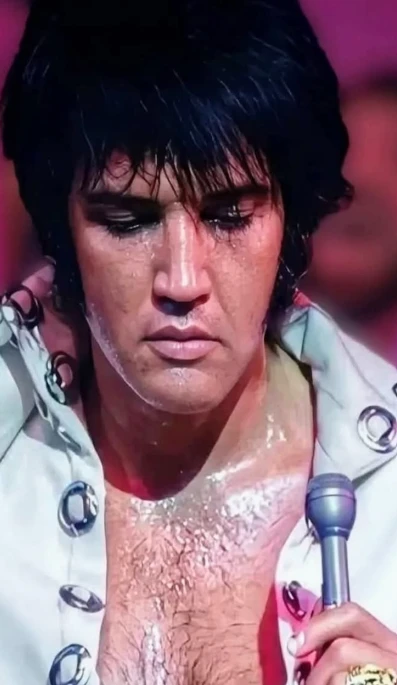
For years, Elvis had been carrying battles most people never saw. Behind the bright lights, the roaring crowds, the famous smile, and the jeweled stage outfits was a man living with physical pain, exhaustion, and private struggle. The world saw the performer. Fans saw the King. But inside that image was a human being whose body had been working against him for much of his life.
From an early age, Elvis suffered from serious digestive problems that caused discomfort, pain, and long nights without real rest. As the years passed, the condition became harder to manage. What may have looked from the outside like simple fatigue or weakness was often something much deeper. His body was under pressure. His system was strained. Pain returned again and again, even when he tried to push through it. For a man expected to step on stage and give thousands of people joy, that burden was enormous.